
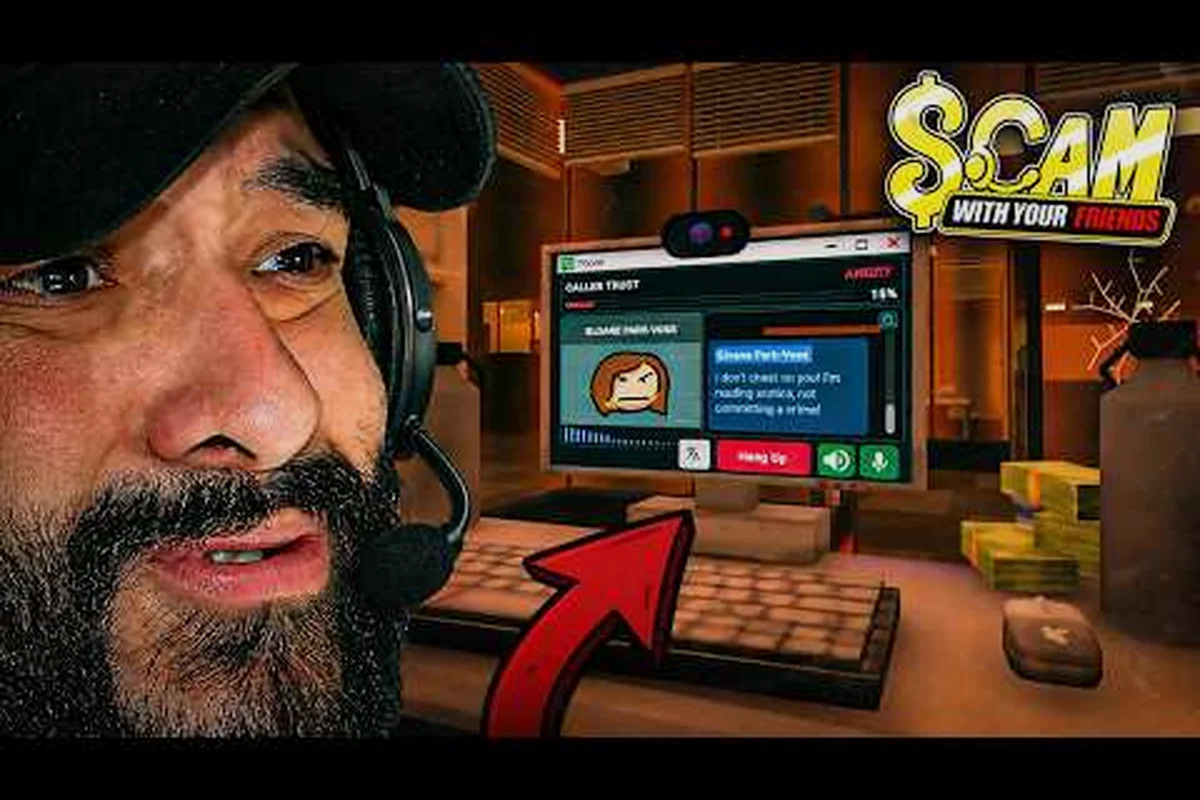
Most players plateau the moment they stop reading callers and start reading scripts. These Scam With Your Friends pro tips fix that gap, turning shaky first calls into confident paydays. If your earnings have flatlined, the problem is rarely your lines — it's your timing, your reads, and how you handle the chaos between calls.
Why Pro Tips Beat Raw Grinding
Grinding calls without a plan caps your ceiling fast. The players who climb to the top of the leaderboard treat every shift like a puzzle with moving pieces, not a slot machine you pull until it pays. In practice, the biggest jump in earnings comes from three habits: reading caller tone before you commit, managing your desk state between calls, and knowing when to walk away from a bad mark.
A solid beginner guide covers the controls and call basics, but pro play is about decision quality under pressure. The difference shows up in small numbers: a pro reads hesitation in a caller's voice within the first two lines and either commits or cuts bait, while a noob keeps talking and burns the clock. That single read — commit or drop — is what pushes conversion rate from a middling band into a strong one, and it's the same skill that lets a top earner recover on the next call instead of tilting through a couple of dead ones.
| Skill Layer | Average Player | Pro Player |
|---|---|---|
| Calls per shift | Moderate | Far higher |
| Successful conversions | Middling hit rate | Much higher hit rate |
| Time wasted per bad mark | Long stalls | Almost none |
| Recovery after a failed call | A few calls | The very next call |
Those gaps compound. If you convert far more often and waste a fraction of the time, you are not marginally better — you are running a completely different shift. The conversion rate is the single metric that separates a noob from a top earner, and it is built from reads, not luck.
The trap most players fall into is chasing volume. More calls only help if each call is worth making. A pro player drops a dead mark in seconds and reinvests that time into a live one, which is why their shift totals look impossible to casual players.
The Mindset Shift From Noob to Pro
Stop trying to win every call. Start trying to identify which calls are winnable. That single reframe is the backbone of going from noob to pro in Scam With Your Friends, because it forces you to evaluate before you perform. Veteran players describe this as "reading the room before you speak," and it changes everything about how a shift feels.
When you stop forcing bad marks, your stress drops, your focus sharpens, and your good calls get better. That's the real payoff of the noob-to-pro shift: a calm judge notices the small tells a panicked one misses — a teammate's pause before a "safe" answer, a client's too-quick agreement, a vote that lands one beat late. The pros aren't faster talkers — they're faster judges, and judgment only speeds up when you're not burning energy on unwinnable calls.
Reading Callers Before You Commit
The first ten seconds of a call decide most of its outcome. Pro players listen for hesitation, background noise, and how quickly a caller answers a simple question. A mark who pauses before giving basic info is usually guarded; a mark who over-shares is usually easy. In practice, caller tone predicts success more reliably than any script line.
Here's how experienced players sort marks fast: they run a two-second triage the moment a caller picks up, scoring three signals at once — answer latency, tone register, and background audio — then bucket the caller before the first scripted line even lands. A caller who answers within one ring in a flat, casual register with quiet background gets flagged high-value and moved straight to rapport-building; a caller who takes four-plus seconds, repeats your opening question, or has TV chatter bleeding through gets tagged distracted and steered with simpler, lower-pressure prompts. The tell that separates a pro from a noob here is what happens on the second call: pros log the read (latency, tone, noise) alongside the outcome, so after twenty or thirty calls they're pattern-matching against their own history instead of guessing fresh each time. That logged read is also what makes the office guide useful — once you're running multiple lines, you can compare reads across callers and spot which signal (usually tone, not latency) is actually predicting your successful transfers.
-
Fast, casual answers — high-value target, lean in and build rapport
-
Long pauses or repeated questions — guarded mark, slow down or bail
-
Background chatter or TV noise — distracted mark, easier to steer
-
Aggressive or suspicious tone — high risk, cut early and move on
-
Over-friendly, chatty tone — prime mark, let them talk and guide gently
The office guide breaks down how call flow and transferred calls interact with these reads, which matters once you're juggling more than one line at a time. Reading tone isn't a talent — it's a checklist you run in your head every single call until it becomes automatic.
Spotting a Dead Mark Early
A dead mark is one you cannot convert no matter how good your lines are. Pros bail fast. If a caller challenges your premise twice, asks for verification, or goes quiet for more than a few seconds, that's your cue. Cutting a dead mark early isn't a loss — it's the reason your shift totals stay high.
Track your bail-to-convert ratio every shift, ideally in a simple two-column log: marks approached versus marks that actually paid. A healthy pro ratio has you cutting several dead marks for every one you convert. If your bail rate is near zero, that's a red flag, not a badge of persistence. It means you're grinding on callers who already challenged your premise twice or went silent for too long, burning minutes that a clean drop-and-redial would have recovered. Logging this weekly also reveals patterns — maybe your dead-mark rate spikes on certain scripts or times of day, so you can swap your opener before the shift starts instead of after the damage is done.
Desk Management and Call Stacking
Your desk is a resource, and messy desks lose money. Pro players keep their active calls organized so nothing slips, and they never let one bad call poison the next. The call stack — the order and timing of your active conversations — is where intermediate players separate from beginners.
| Desk State | What It Costs You | Pro Fix |
|---|---|---|
| Too many open calls | Dropped marks, missed cues | Keep active calls low |
| Cluttered notes | Slow recall mid-call | One line per mark |
| Ignored transfers | Lost conversions | Handle transfers first |
| No forced wait between calls | Carryover stress | Short reset ritual |
The reset ritual matters more than people admit. After a failed call, take a beat, clear your head, and start the next mark fresh. Players who skip this carry frustration into the next conversation and convert less. A clean desk and a clean head are the same thing in practice.
Stacking calls well means you're never idle but never overwhelmed. A small number of active marks is the sweet spot for most players; beyond that, quality collapses. If you're solo, the solo guide covers how to pace a shift without a partner feeding you marks.
When to Transfer vs. When to Close
Transfers exist to move a mark to a better-suited line. Close a call yourself when you've got momentum and the mark is warm. Transfer when the mark needs a skill you don't have on that line, or when your stack is full and you'd otherwise drop them. Knowing the difference is a core pro skill.
Improv Skills That Carry a Shift
Scripts get you through the first call. Improv gets you through the tenth. Pro players treat every conversation as a scene they're steering, not a form they're filling out. The best Scam With Your Friends tips all circle back to one idea: stay flexible, and let the mark's own words do the heavy lifting.
Key improv habits that pay off: mirroring the mark's exact phrasing back at them (repeating "just trying to help my mom out" verbatim, for instance) signals agreement without committing you to anything, while open questions like "what's the worst part of dealing with this?" hand them the script for their own con. Pausing two or three seconds after they finish talking pulls more detail out than any follow-up line, since most marks rush to fill dead air with exactly the account info or backstory you need. Agreeing first — "totally, and here's the thing..." — keeps their guard down before you redirect, and never forcing the close lets them talk themselves into the transfer instead of you pushing it.
-
Mirror their language — repeat their words back to build trust
-
Ask open questions — let them reveal what they care about
-
Pause instead of filling silence — silence pulls information out
-
Agree before redirecting — "totally, and here's the thing..."
-
Never rush the close — let the mark arrive at it themselves
These habits turn a rigid call into a natural conversation, which is exactly what makes a mark comfortable enough to commit. Improv isn't about being funny or quick — it's about being present and responsive. The reason it works is mechanical: a mark who feels heard stops scanning for the exit and starts volunteering details, and every volunteered detail is one less thing you have to extract. A two-second pause after they mention "the refund portal," for example, routinely earns you the portal's login flow without a single probing question, because silence reads as patience while interrogation reads as pressure. The five habits above aren't separate tricks — they chain into one loop: mirror to lower the guard, ask open to widen the story, pause to let them fill it, agree to keep the door open, and hold the close until they walk through it on their own.
Building a Personal Line Bank
Instead of memorizing full scripts, pros build a line bank — a set of flexible phrases they can pull from depending on the moment. Ten good openers, ten redirects, ten closes. Mix and match. This keeps your calls fresh and stops you from sounding rehearsed, which is the fastest way to lose a sharp mark.
Treat the line bank as a living document, not a one-time list: after every shift, log which openers, redirects, and closes actually landed, then retire the dead weight. A phrase that worked twice — say, a redirect that pulled a mark back from the "let me think about it" stall — earns a permanent slot, while anything that triggered suspicion gets cut immediately. Over ten to fifteen shifts, this pruning turns a bloated list of twenty mediocre lines into eight or nine reliable workhorses you can fire without hesitation, which is exactly what separates noob callers from pros who close consistently.
Scaling Earnings Without Burning Out
The final leap from noob to pro is sustainability. Players who burn out mid-shift lose their edge exactly when the marks get good. Pro players pace themselves, protect their focus, and treat the late shift as a marathon, not a sprint. The survival tips cover how unexpected events and distractions can wreck a good run if you're not ready for them.
| Shift Phase | Goal | Pro Approach |
|---|---|---|
| Early shift | Build rhythm | Warm up on easy marks |
| Mid shift | Maximize volume | Stack calls, bail fast |
| Late shift | Protect focus | Slow down, pick best marks |
| Final stretch | Bank the wins | Close clean, no risky calls |
The pattern is simple: warm up, push hard, then coast on quality. Most players do the opposite — they start slow, panic mid-shift, and gamble at the end. Flipping that rhythm alone can lift your totals noticeably. Treat the four rows in the table above as a single tempo curve rather than four separate moods. During the early shift, spend your first few calls on low-stakes marks just to sync your timing and confirm the mark's tell before you commit real pressure. Once the mid shift hits, that warm-up pays off: you can stack calls back-to-back and bail the instant a mark gets suspicious, because your read is already calibrated. The late shift is where discipline beats greed — slow your cadence, drop the marginal marks, and let the best ones come to you instead of chasing them. In the final stretch, close clean: bank what you've already earned rather than risking a fat payout on a coin-flip call. Players who invert this — coasting early and gambling late — hand back their entire run in the last few minutes.
Protecting Focus During Long Shifts
Focus is a resource you spend, so budget it. Take micro-breaks between clusters of calls, keep water nearby, and avoid stacking calls when you're already tired. A tired pro plays like a beginner, and it shows. Guard your focus like it's money, because in this game it is.
Frequently Asked Questions
What are the most important Scam With Your Friends pro tips for new players?
Focus on reading caller tone before committing, bailing on dead marks early, and keeping your active call list short. These three habits lift conversion rate faster than any script improvement, because they cut wasted time and sharpen every call you actually finish.
How long does it take to go from noob to pro?
Most players see a real jump after a few focused shifts of practicing reads and desk management. Going from noob to pro isn't about hours logged — it's about deliberately fixing one weak habit at a time until your conversion rate climbs and stays high across full shifts.
Is improv really better than following a script?
Yes, once you're past the basics. Scripts help early, but marks notice rehearsed delivery and pull back. Improv lets you mirror their language and adapt in real time, which builds the trust that closes calls. Keep a flexible line bank instead of a fixed script.
How many calls should I run per shift?
Aim for a manageable number of quality calls rather than chasing raw volume. Pros convert far more often because they drop bad marks fast and reinvest that time into live ones. Running fewer, better calls beats running many rushed ones every single shift.
What kills most players' earnings?
Forcing bad marks and carrying stress from one call into the next. Both habits tank conversion rate and burn focus. Bailing early and resetting between calls fixes the two biggest leaks in a typical shift, and the difference shows up in your totals within a session.
The path from noob to pro in Scam With Your Friends runs through better decisions, not better lines. Read your callers, manage your desk, stay flexible on the phone, and protect your focus across the whole shift. Stack those habits and the earnings follow on their own.