
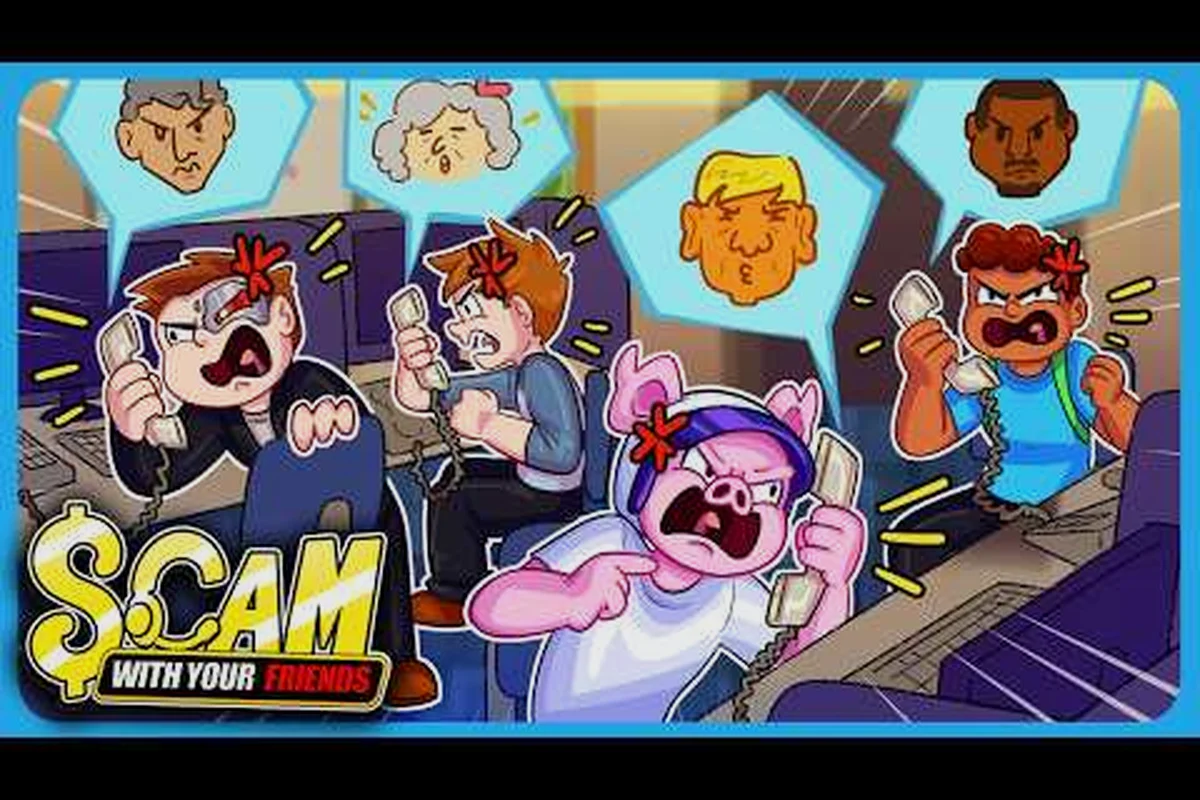
A clean run in Scam With Your Friends can fall apart in seconds, and these survival tips keep your crew alive when everything goes sideways. Unexpected events hit hardest when nobody planned for them, so read on before your next call. If a suspicious file or mod has already slipped into your session, our guide on how to remove a virus from Scam With Your Friends walks through the cleanup before it ruins the next run.
Why Unexpected Events Decide Most Runs
Every session of Scam With Your Friends throws curveballs that punish unprepared crews, and understanding how these events fire is the difference between a clean payout and a total collapse. Random events trigger on random schedules, on failed persuasion checks, and whenever a target grows suspicious enough to escalate. Because the game layers multiple threat types at once, a single bad roll can cascade into a chain reaction that ends your run.
In practice, most failed runs trace back to one of four sources: a virus that spreads through your own equipment, a scambaiter who flips the script on you, a distraction that splits your team at the worst moment, or a disaster event that wipes progress you cannot recover. Recognizing which category you are facing lets you apply the right counter instead of panicking.
The table below breaks down the main threat types and how often they show up, pairing each with the trigger that sets it off and the counter that actually works. Frequency matters here: virus infections and scambaiter ambushes show up in the majority of failed runs, while disaster events are rare but can erase an entire payout window if your crew has no recovery plan. Treat the "Primary Counter" column as your first-response checklist — quarantining a virus early costs one player a few seconds, but letting it spread through shared equipment can stall the whole team during a timed persuasion push.
| Threat Type | Typical Trigger | Frequency Reported | Primary Counter |
|---|---|---|---|
| Virus infection | Opening a suspicious file or link | Very common | Quarantine and clean |
| Scambaiter ambush | Target turns out to be a baiter | Common | Cut the call fast |
| Distraction event | Random timing or noise cue | Common | Assign a spotter |
| Disaster event | Late-run escalation | Uncommon but severe | Recover or restart |
The key takeaway is that threat recognition speed matters more than any single tool. A crew that identifies the problem in the first few seconds almost always survives, while a crew that argues about what is happening usually does not.
Pre-Event Cues Worth Reacting To
Before any event fully triggers, the game gives subtle cues: audio glitches, on-screen flickers, or a target whose tone shifts suddenly. Players who train themselves to notice these pre-event tells gain a huge advantage because they can pre-position and warn teammates. In practice, crews that call out warnings early reduce their wipe rate dramatically compared to silent teams.
Surviving Viruses Without Losing the Run
Viruses are the most misunderstood threat in Scam With Your Friends, and mishandling one can infect your entire setup. A virus typically enters when a crew member opens a file, clicks a link, or interacts with a compromised device during a scam attempt. Once active, it spreads to nearby equipment and degrades your tools until you either clean it or the run ends.
The good news is that viruses follow predictable patterns. They spread outward from the infected device, they slow your actions, and they eventually trigger a system failure if ignored. The bad news is that most players react too late because they treat the symptom instead of the source.
| Virus Stage | Visible Symptom | Time to Escalate | Best Action |
|---|---|---|---|
| Stage 1 | Minor lag, flickering UI | Slow | Isolate the device |
| Stage 2 | Spreading to adjacent tools | Moderate | Run a scan |
| Stage 3 | Full system failure | Fast | Emergency clean or abandon |
If you want a deeper walkthrough of detection and removal, the dedicated guide on how to remove a virus covers the exact cleaning sequence step by step. The short version: isolate first, scan second, and never keep using an infected device hoping it clears itself.
Quarantine First, Panic Never
The single most effective habit is to quarantine the infected device the moment you suspect it. Pulling it out of the active rotation stops the spread and buys your crew time to finish the current scam. Players who skip quarantine usually watch the infection jump to a second machine within a minute, and from there the run is effectively over.
Handling Scambaiters Who Turn the Tables
A scambaiter is a target who is playing you right back, and they are the most dangerous opponent in Scam With Your Friends because they weaponize your own tactics. Baiters pretend to fall for your pitch, keep you on the line, and slowly extract information about your crew, your methods, and your weak points. By the time you realize what is happening, they have already reported you or triggered a raid.
The tell is subtle: a baiter is often too cooperative, too curious, or too calm under pressure. Real targets get flustered, hesitate, or push back when the fake virus popup hits their screen. Baiters instead ask leading questions and steer the conversation toward your setup — your VOIP provider, your payment rail, your script. Watch for the 30-second silence after you name a price: a genuine mark haggles or panics, while a baiter goes quiet because they are typing your details into a report. One reliable tripwire is a target who volunteers a callback number before you ask; legitimate marks guard their contact info, baiters hand it over to trace your caller ID. If two or more of these signals stack inside a single call, treat it as a confirmed scambaiter and burn the identity.
| Baiter Behavior | What It Signals | Recommended Response |
|---|---|---|
| Excessive cooperation | They want you talking | Shorten the call |
| Probing questions | They are gathering intel | Deflect and disengage |
| Sudden calm | They are stalling | Cut immediately |
| Repeated callbacks | They are tracking you | Change your approach |
Learning to detect a baiter early ties directly into your broader persuasion skills, and the caller trust guide explains how to read a target's real intentions before you commit to a pitch. The core lesson is simple: if a target makes the conversation too easy, assume it is a trap and exit cleanly.
Cutting the Call Without Losing Face
When you identify a baiter, the worst move is to keep talking out of pride. Disengaging early protects your crew, your tools, and your cover. A clean exit costs you one target; a stubborn exit costs you the entire run. Experienced players treat every suspicious call as disposable and move on without hesitation.
Managing Distractions That Split Your Team
Distractions are the quiet killer of otherwise solid runs. A distraction event pulls one or more crew members away from their role, and if nobody covers the gap, the whole operation collapses. These events fire on random schedules, on loud noise cues, or whenever a target creates chaos to buy time.
The problem is not the distraction itself but the role vacuum it creates. If your caller gets pulled away and nobody takes over, the target notices the silence and grows suspicious. If your spotter leaves, you lose awareness of incoming threats. Distractions compound fast.
| Distraction Source | Who It Pulls Away | Immediate Fix | Long-Term Fix |
|---|---|---|---|
| Random event | Anyone nearby | Nearest player covers | Pre-assign backups |
| Noise cue | The spotter | Caller watches briefly | Rotate spotters |
| Target-created chaos | The caller | Backup takes the line | Train dual roles |
| Environmental trigger | Multiple players | Pause and regroup | Plan safe zones |
The best defense is redundancy. Every critical role should have a designated backup who can step in within seconds. Crews that assign backups before the run starts handle distractions almost effortlessly, while crews that improvise usually lose momentum and never recover it.
Building a Backup Rotation
A simple backup rotation solves most distraction problems. Before each run, decide who covers the caller, who covers the spotter, and who handles cleanup if things go wrong. Write it down if your crew keeps forgetting. The thirty seconds you spend planning saves entire runs later.
Disaster Recovery When the Run Falls Apart
Sometimes everything goes wrong at once and you have to recover rather than prevent. Disaster recovery in Scam With Your Friends is about salvaging what you can, protecting your crew, and resetting for the next attempt without losing hard-won progress. The instinct to fight a losing battle is the biggest mistake players make.
Recovery works best when you accept the loss early. Once a disaster event escalates past a certain point, no amount of scrambling saves the run. What you can save is your equipment, your unlocked schemes, and your crew's morale. Abandoning a doomed run cleanly is a skill, not a failure.
| Recovery Scenario | Salvageable | Lost | Recommended Move |
|---|---|---|---|
| Single device infected | Other tools | Infected device | Quarantine and continue |
| Baiter exposed the crew | Reputation partially | Current target | Reset cover and rebrand |
| Team split by distraction | Tools intact | Time and momentum | Regroup and restart |
| Full disaster event | Unlocked schemes | Current run progress | Abandon and reset |
The players who recover fastest are the ones who treat each run as disposable. Progress lives in your unlocks and your skills, not in any single session, so losing one run never costs you the long game. This is why the Full disaster event row in the table above lists Unlocked schemes as salvageable while Current run progress is written off — your meta-progression survives the wipe even when the session does not. A crew that loses three consecutive runs to a scambaiter sting still keeps every scheme they have banked, meaning the fourth attempt starts from a stronger baseline than the first. Contrast that with a player who refuses to abandon and burns their remaining tools trying to salvage a doomed target: they exit with the same lost run plus depleted equipment, so the reset costs them twice. Treating each session as disposable is therefore not fatalism — it is the fastest route back to a full-strength crew for the next attempt.
Resetting Without Losing Momentum
After a failed run, take a short break, review what triggered the collapse, and adjust your plan. Post-run reviews turn a bad session into a learning opportunity. Crews that debrief after every wipe improve noticeably faster than crews that jump straight back in without reflecting.
Building a Crew That Survives Anything
Long-term survival comes down to crew discipline rather than individual skill. A well-drilled team of average players outperforms a talented but disorganized group every time, because survival in Scam With Your Friends is a team sport. Communication, role clarity, and calm under pressure matter more than any single trick.
Start by defining clear roles: a caller, a spotter, a cleaner, and a floater who covers gaps. Then drill the basics until they become automatic. When a virus hits or a baiter appears, your crew should react on instinct rather than debate. That reflex is what separates crews that survive from crews that fold.
| Crew Habit | Impact on Survival | How to Build It |
|---|---|---|
| Clear role assignment | High | Assign before every run |
| Backup coverage | High | Rotate backups each session |
| Fast threat callouts | Very high | Practice warning drills |
| Post-run debriefs | Moderate | Review after each wipe |
If you are still refining the fundamentals, the beginner guide walks through controls, voice setup, and the core loop so your whole crew starts on the same page. Once the basics are locked in, survival tips like these become second nature instead of emergency procedures.
Practicing Under Pressure
Deliberately practice worst-case scenarios. Run drills where a virus triggers on purpose, or where a baiter is scripted into the call. Pressure practice builds the muscle memory that saves real runs. Crews that only practice the easy path crumble the moment an unexpected event hits, while crews that rehearse chaos stay calm when it matters.
Frequently Asked Questions
What are the most common unexpected events in Scam With Your Friends?
The most common unexpected events are virus infections, scambaiter ambushes, distraction triggers, and late-run disaster escalations. In practice, viruses and distractions appear most often, while disaster events are rarer but far more damaging. Recognizing which category you face lets you apply the correct counter immediately instead of reacting blindly.
How do I stop a virus from spreading through my crew?
Quarantine the infected device the moment you notice symptoms like lag or UI flickering. Pulling it out of the active rotation stops the spread and buys time to run a scan. Never keep using an infected device hoping it clears itself, because the infection jumps to adjacent tools within roughly a minute.
How can I tell if a target is a scambaiter?
Baiters are usually too cooperative, too curious, or too calm. Real targets get flustered and push back, while baiters ask leading questions and steer the conversation toward your setup. If a call feels too easy, assume it is a trap and disengage early rather than continuing out of pride.
What should I do when a distraction splits my team?
Cover the vacated role immediately using a pre-assigned backup, then regroup once the distraction passes. The danger is not the distraction itself but the role vacuum it creates, which lets targets grow suspicious. Crews that assign backups before every run handle distractions almost effortlessly.
Is it ever better to abandon a run instead of recovering?
Yes. Once a disaster event escalates past a certain point, no amount of scrambling saves the run. Abandoning cleanly protects your equipment, unlocked schemes, and crew morale. Progress lives in your unlocks and skills, not in any single session, so a clean reset costs you nothing in the long game.
Survival in Scam With Your Friends is not about avoiding every threat, because unexpected events will always find you. It is about reacting fast, covering your crew's gaps, and knowing when to cut your losses. Master virus quarantine, baiter detection, distraction coverage, and clean disaster recovery, and your crew will outlast almost anything the game throws at you.