
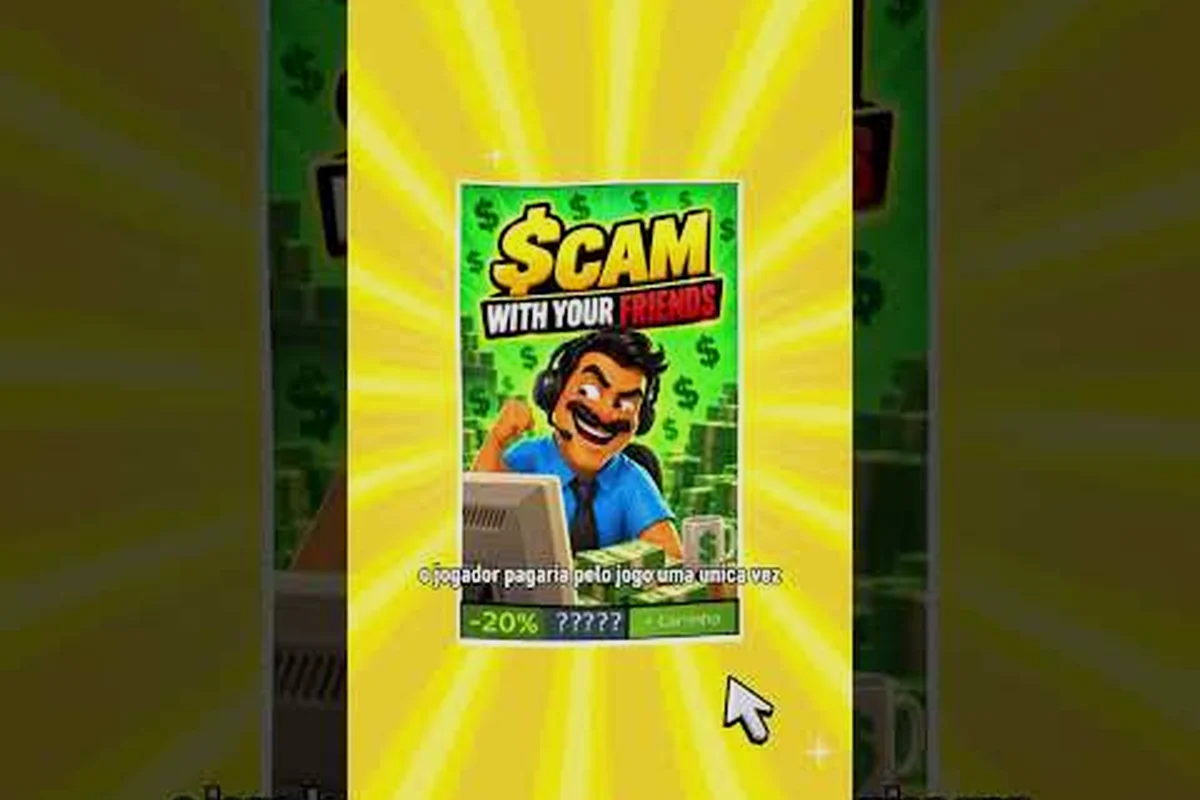
Getting fired in Scam With Your Friends is not the end of your run — it is a scripted consequence you can plan around. This fired guide explains what actually happens when the boss cuts you loose, how permadeath interacts with your save file, and how to restart a run without losing everything you learned.
The sting of a termination screen hits hardest when you did not see it coming — but in Scam With Your Friends, that screen is a scripted outcome rather than a random punishment. Because permadeath only triggers on a genuine termination, your save file survives the run reset, meaning the scam techniques, shift knowledge, and boss-behavior reads you banked carry forward. Adjustable difficulty further softens the blow: lowering it before a risky performance review reduces how often the boss escalates to firing, while keeping it high preserves the challenge for players chasing a clean restart run.
What Getting Fired Actually Does to Your Run
The first thing to internalize is that a termination is a run-ending event, not a permanent account wipe. When your boss triggers the fired state, the current run closes out and your office progress for that run is locked. Everything you earned during that specific run — desk upgrades, salary payouts, and unlocked scam scripts — is evaluated and then discarded from the active save slot.
In practice, the game treats each run as a self-contained career arc rather than an endless grind. That design choice matters because it reframes failure. You are not losing months of progress; you are losing one career attempt, and the meta-knowledge you built carries forward into the next attempt.
Here is what survives a termination and what does not: run-specific salary and cash, desk and office upgrades, and the bulk of your unlocked scam scripts are wiped when the fired state triggers, since they are bound to the active save slot. The exceptions are achievements and stats, which are tracked permanently, plus your personal knowledge of boss patterns — the rageaholic boss review timing, for instance — which lives in player skill rather than save data. Difficulty settings also carry over, so you can immediately restart a run at a higher difficulty without re-unlocking anything.
| Element | Survives Getting Fired? | Notes |
|---|---|---|
| Run-specific salary and cash | No | Reset with the run |
| Desk and office upgrades | No | Tied to the active run |
| Unlocked scam scripts | Partially | Some persist as account unlocks |
| Achievements and stats | Yes | Tracked permanently |
| Knowledge of boss patterns | Yes | Player skill, not save data |
| Difficulty settings | Yes | Configurable per new run |
The practical takeaway is that you should treat every run as a disposable experiment. Push aggressive strategies early, learn the rageaholic boss timing windows, and accept that a bad review is data rather than defeat. Players who internalize this mindset restart faster and climb the difficulty ladder sooner.
If you want to understand the review mechanics that lead to termination in the first place, the breakdown of how to get promoted and survive the boss's reviews covers the review standards that keep you employed.
The Difference Between Fired and Quit
A fired state and a voluntary quit are not the same thing mechanically. When you quit, you choose the moment and can often bank certain run rewards. When you are fired, the game forces the transition and you lose the option to cash out. This asymmetry is why veteran players recommend quitting a doomed run early rather than riding it into a termination.
Reading the Warning Signs
Termination rarely arrives without warning. The boss's review process telegraphs dissatisfaction through escalating feedback, missed quotas, and increasingly hostile dialogue. Learning to read those signals gives you a window to pivot your strategy — or to quit cleanly before the axe falls.
How Permadeath Works in Scam With Your Friends
The permadeath system is the single most misunderstood mechanic in the game, and it is worth slowing down here. Permadeath does not mean your account is destroyed. It means the active run cannot be resumed once it ends, whether by termination, voluntary quit, or a failed objective. You start a fresh run, but your account-level unlocks and achievements remain intact.
In practice, the game keeps a clear separation between run state and account state. Run state includes your current desk layout, your in-run cash, and your active scam scripts. Account state includes cosmetics, permanent unlocks, and statistics. Permadeath only wipes the former.
This distinction is why experienced players talk about "run-based progression" rather than a single continuous save. Each run is a chapter, and permadeath simply closes the chapter. Because run state and account state are tracked separately, a fired run never costs you cosmetics or permanent unlocks — only the desk layout, in-run cash, and active scam scripts tied to that specific run. That separation is what makes restarting feel low-stakes: you keep every account-level achievement while rebuilding your operation from scratch, which is why the community treats a wipe as a reset rather than a loss.
| Permadeath Trigger | Run State | Account State |
|---|---|---|
| Fired by boss | Wiped | Preserved |
| Voluntary quit | Wiped | Preserved |
| Failed objective | Wiped | Preserved |
| Manual save reload | Restored to save point | Preserved |
| Game crash | Depends on autosave | Preserved |
The crash row deserves attention because it is the one case where behavior can vary. Reported by players, a hard crash may roll you back to the last autosave rather than ending the run outright, which is a meaningful difference if you were mid-shift.
Why Permadeath Improves the Game
It is tempting to read permadeath as punishment, but the design intent is tension. When a run can end at any moment, every decision carries weight — which desk upgrade you buy, which scam you run, and whether you push your luck on a risky payout. That tension is the core of the experience, and removing it would flatten the game into a grind.
Permadeath and Difficulty
Permadeath severity scales with your chosen difficulty. On the easiest settings, the game is more forgiving about warnings and gives you more recovery room before a termination. On the hardest settings, a single bad review can end the run. This is why adjustable difficulty is the most important lever for new players.
Restarting a Run Without Losing Your Mind
Restarting well is a skill. The players who bounce back fastest are the ones who treat a restart as a chance to apply a specific lesson rather than to repeat the same mistakes. Before you hit the new-run button, spend thirty seconds identifying the single decision that doomed the last attempt.
Common restart mistakes include: rebuying the same desk upgrades that never generated enough income, ignoring the adjustable difficulty slider and jumping straight back into a brutal setting, skipping the early low-risk scams that build a cash cushion, and forgetting to check which account unlocks are now available. Each of these repeats the previous run's failure mode instead of correcting it, which is why a permadeath restart should always begin with a single diagnosed cause rather than a fresh impulse buy.
-
Rebuying the same desk upgrades that failed to generate enough income
-
Ignoring the difficulty slider and jumping straight back into a brutal setting
-
Skipping the early low-risk scams that build a cash cushion
-
Forgetting to check which account unlocks are now available
A structured restart beats a panicked one. The table below outlines a simple restart checklist that keeps you from repeating the previous run's failure mode. Work it in order: first review the failing decision you identified a moment ago, then adjust the adjustable difficulty slider if the last run ended too early to compound income, then open with the low-risk scams that rebuild a cash cushion before touching any desk upgrade. Only after that buffer exists should you reinvest in income upgrades, and only in the late run should you push high-payout scams for score. Skipping straight to the aggressive phase is the single most common way a restart collapses into the same permadeath wall as the run before it.
| Restart Phase | Action | Why It Matters |
|---|---|---|
| Review | Identify the failing decision | Prevents repeat mistakes |
| Setup | Adjust difficulty if needed | Controls run length |
| Early run | Run low-risk scams first | Builds a cash buffer |
| Mid run | Invest in income upgrades | Compounds earnings |
| Late run | Push high-payout scams | Maximizes final score |
The run-based progression guide walks through the upgrade priorities that make each restart more efficient than the last, which is the real measure of improvement in a permadeath game. Treat that guide as the mid-run and late-run layer of the checklist above: it tells you which income upgrades compound fastest once your low-risk scam buffer exists, and when a high-payout scam is worth the attention. The metric to watch is not how far one run reached but how quickly each successive run clears the early phase — if your second attempt rebuilds its cash cushion in fewer in-game days than the first, your restart discipline is working, even before you touch a new desk upgrade.
Choosing Your Restart Difficulty
Your first restart after a termination should usually be one notch easier than the run you just lost. This is not cowardice — it is calibration. You want to rebuild your confidence and your cash buffer on a setting where you can experiment without instant punishment, then step back up once your fundamentals are solid.
Speedrunning the Early Game
Once you know the early-game scam scripts by heart, the first few shifts of a new run become almost automatic. Experienced players compress this phase into a tight routine, banking enough cash to buy their preferred desk setup before the first serious review from the boss. Mastering this opening is what separates a fast restart from a slow one.
Save Files, Autosaves, and How Saving Works
Understanding the save system is essential because it determines what you can recover after a bad run. Scam With Your Friends uses an autosave-driven model rather than a manual save-anywhere system. The game writes your run state at defined checkpoints, typically at the end of a shift or a major event.
This means there is no "save scumming" in the traditional sense. You cannot reload to undo a single bad decision mid-shift, because the autosave captures the state after the decision has already resolved. What you can do is understand when the checkpoints fire so you know exactly how much progress is at risk at any moment.
| Save Event | When It Fires | Recovery Value |
|---|---|---|
| Shift end autosave | After each shift | High — full run state |
| Major event autosave | After key story beats | High |
| Mid-shift autosave | Rare, event-driven | Medium |
| Manual save | Not supported | None |
| Cloud sync | Platform-dependent | Backs up local save |
In practice, the most common save-related frustration is expecting a manual save that does not exist. Players coming from games with save-anywhere systems sometimes assume they can reload a bad review, only to discover the autosave already committed the outcome.
Backing Up Your Save File
On PC, your save file lives in the game's local data directory, and copying it to a backup folder is a legitimate way to protect against corruption or a crash mid-write. This is not the same as save scumming — it is basic data hygiene. If your save ever corrupts, a backup is the difference between a minor inconvenience and a lost account.
Cloud Saves and Cross-Platform
If your platform supports cloud saves, enable them. Cloud sync protects against hardware failure and lets you continue a run on another device. Just be aware that cloud and local saves can occasionally conflict, so pick one as your authoritative source and stick with it.
Adjustable Difficulty as Your Safety Net
The adjustable difficulty system is the most powerful tool a struggling player has, and it is underused. Rather than treating difficulty as a point of pride, treat it as a dial you turn to match your current skill level. The game does not punish you for lowering it, and the run-based structure means you can always raise it again on the next attempt.
Difficulty affects several interlocking systems: review tolerance (how many bad reviews you can absorb before termination), payout scaling (how much cash each scam generates), boss aggression (how quickly the rageaholic boss escalates), and warning clarity (how obvious the termination signals are). Lowering from Standard to Relaxed, for example, raises review tolerance while trimming payouts, so you can survive early mistakes like a botched scam without triggering a fired state, then bank enough cash to attempt harder runs later.
-
Review tolerance — how many bad reviews you can absorb before termination
-
Payout scaling — how much cash each scam generates
-
Boss aggression — how quickly the rageaholic boss escalates
-
Warning clarity — how obvious the termination signals are
| Difficulty | Review Tolerance | Payout | Best For |
|---|---|---|---|
| Relaxed | High | Reduced | Learning mechanics |
| Standard | Medium | Baseline | Balanced runs |
| Hard | Low | Increased | Experienced players |
| Brutal | Minimal | Highest | Score chasing |
The hardest difficulty breakdown explains how the day cycle and payout scaling change at the top end, which is useful once you are ready to climb back up. The reason this matters is that Brutal difficulty compresses your review tolerance to a near-minimal buffer while paying out the highest per-scam cash, so a single botched scam that would be survivable on Relaxed can end the run outright. Treat the dial as a staircase rather than a switch: bank a few Standard runs to learn the rageaholic boss escalation timing, drop to Relaxed only when a specific scam keeps triggering bad reviews, then step back up once you can clear a full day cycle without losing review headroom.
When to Lower Difficulty
Lower it the moment you notice yourself repeating the same failure. If you have been fired three times in a row at the same difficulty, the setting is telling you something. Drop a notch, rebuild your fundamentals, and return when the early game feels effortless again.
When to Raise It
Raise difficulty when you finish runs with cash to spare and no close calls. If you are cruising through reviews without tension, the setting is too easy and you are leaving score on the table. The sweet spot is a difficulty where you feel real pressure but rarely get blindsided.
Mental Reset After Losing a Run
The mental game matters as much as the mechanical one. Permadeath games reward players who can lose a run and immediately reframe it as a learning opportunity. The efficiency guide is a good companion here, because it focuses on surviving bad days and turning a weak run into a respectable one.
A few habits separate resilient players from frustrated ones: the difference rarely shows up in a single run, but in how you respond to a termination caused by a bad review, a missed quota, or a co-op partner who panics under pressure. Players who treat each failed run as a data point — noting which mechanic actually ended it — recover faster than those who immediately hit restart on the same seed and repeat the identical mistake.
-
Log the cause of each termination in a note
-
Set one improvement goal per run
-
Never restart on tilt — take a short break first
-
Celebrate small wins like surviving a tough review
These habits sound soft, but they compound, because Scam With Your Friends permadeath punishes repetition rather than raw skill. A player who logs one specific weakness per run — say, dying to the same quota check or panic-triggered co-op vote — and fixes only that before the next restart will out-progress a player who blindly restarts the same seed ten times and relearns nothing. Each logged termination becomes a data point you can act on, and the small win of surviving one extra review stacks into a real difficulty buffer over a session.
Frequently Asked Questions
Does getting fired delete my save file?
No. Getting fired ends the current run and wipes run-specific progress, but your account-level unlocks, achievements, and statistics remain intact. You simply start a fresh run from the main menu. Permadeath applies to the run, not to your entire save.
How does permadeath work in Scam With Your Friends?
Permadeath means the active run cannot be resumed once it ends, whether through termination, a voluntary quit, or a failed objective. Your account state is preserved, so permanent unlocks and stats carry over. Each run is treated as a self-contained career arc rather than a continuous save.
Can I manually save my game?
No, the game uses an autosave-driven model that writes your run state at defined checkpoints like shift ends and major events. There is no manual save-anywhere option, so you cannot reload to undo a single bad decision mid-shift. On PC you can still back up the local save file for safety.
Should I lower the difficulty after getting fired?
Usually yes, at least one notch. Lowering difficulty increases review tolerance and makes termination signals clearer, giving you room to rebuild fundamentals. Once the early game feels effortless again, step the difficulty back up. Adjustable difficulty is a tool, not a penalty.
What is the fastest way to restart a run?
Identify the single decision that ended your last run, adjust difficulty if needed, then run low-risk scams early to build a cash buffer before investing in income upgrades. Compressing the early game into a tight routine lets you reach your preferred desk setup before the first serious review from the boss.
Getting fired in Scam With Your Friends is a designed checkpoint, not a dead end. Once you understand that permadeath only resets the run while preserving your account, that autosaves govern your recovery options, and that adjustable difficulty exists to be used, a termination becomes a manageable setback. Restart with a specific lesson in mind, calibrate your difficulty honestly, and each new run will start stronger than the last.